Myofascial Release Bath: Treatment That Works on the Real Cause
Most chronic pain treatments work on the site of pain. Myofascial release works on the system generating it. For patients in Bath and Bristol who have tried everything else, this distinction matters.
20+Years Clinical Experience
5 YrsEverton FC Medical Team
30-50%Pain Reduction Session One
Why Massage Stops Working
If you have had massage therapy before and felt better for a day or two before the pain returned, there is a clear reason. Standard massage works on muscle tension. It can release the surface layer and bring temporary relief, but it cannot address the Fascial restrictions that are causing the muscle to tighten in the first place. When you leave, the restriction is still there. The tension rebuilds. The pain comes back.
Myofascial release is different in one fundamental way. It works directly on the Fascia, the continuous web of connective tissue that surrounds and connects every muscle, organ, nerve, and bone in your body. When that tissue becomes restricted, it is not something a standard massage can reach. It requires a different technique, a different depth of understanding, and a different map of how the body actually works.
At Physology, based at WellBath Yoga and Wellbeing Centre on Woolley Lane in Bath, myofascial release is not a technique we apply. It is the foundation of how we think about the body. Our approach has been developed over twenty years of clinical practice, including work with Everton FC's first team medical staff and ongoing direct work with Premier League players today, where the standard has always been simple: find the real cause, resolve it, and prevent it from coming back. We serve patients from across Bath, Bristol, and the wider Somerset and Avon area who have not been able to find lasting answers through conventional treatment.
What Is Fascia and Why Does It Matter?
Fascia is the body's most overlooked system. It is a three-dimensional web of connective tissue that runs through every structure in your body without interruption, surrounding muscles, threading through organs, wrapping nerves, and giving the whole body its structural integrity. When it is healthy, it is elastic, hydrated, and completely invisible to you. When it becomes restricted, it thickens, compresses, and begins generating pain signals directly.
The research is clear. Studies by Helene Langevin at Harvard Medical School found that in people with chronic pain, the thoracolumbar Fascia is measurably thickened, with significantly reduced movement between layers. Research by Carla Stecco and Robert Schleip has established that the deep Fascia is densely packed with pain receptors, meaning restricted Fascia does not just create mechanical problems. It actively generates the pain you are experiencing.
This is why a normal scan can show nothing wrong while the pain remains completely real. MRI and ultrasound were not designed to assess the Fascial system. The restriction is there. The imaging simply was not built to see it.
Myofascial release applies sustained, precise pressure to restricted Fascial tissue. Unlike massage, which works with surface muscle tension, myofascial release engages the Fascial layer directly, holding pressure long enough for the tissue to release rather than simply compressing and bouncing back.
What makes our approach at Physology different from standard myofascial release is the assessment that precedes it. Before we treat anything, we map the whole Fascial system using the Anatomy Trains framework, identifying not just where you feel pain but where in the connected system the restriction originated. Pain in the lower back may be driven by restrictions in the hamstrings, the diaphragm, or the deep hip flexors. Neck pain may have its source in the chest and shoulders. Treating the site of symptoms without understanding the source produces exactly the temporary relief you have probably already experienced.
Our myofascial release technique addresses the primary restriction first, then works through the connected lines to restore balance through the whole system. Patients typically notice a 30 to 50 percent reduction in pain in the first session, because for the first time the tissue generating the pain is being treated directly.
The difference between myofascial release and massage is the same as the difference between finding the source and treating the symptom. One produces lasting change. The other produces temporary relief.
Standard Myofascial Release vs the Physology Approach
Conventional approach
The Physology approach
Applied to the site of pain or tension
Applied to the origin of restriction, mapped through assessment
Technique-led: same approach for every patient
Assessment-led: treatment guided by your specific Fascial pattern
Addresses local restriction
Addresses the whole-system restriction pattern behind the symptom
Results depend on finding the right area by feel
Results driven by a complete Anatomy Trains map before treatment
No explanation of why the restriction developed
Full education on the pattern and why conventional treatment missed it
Ongoing management approach
Resolution approach: find the source, treat it, prevent return
A Closer Look at How Your Pain Really Looks
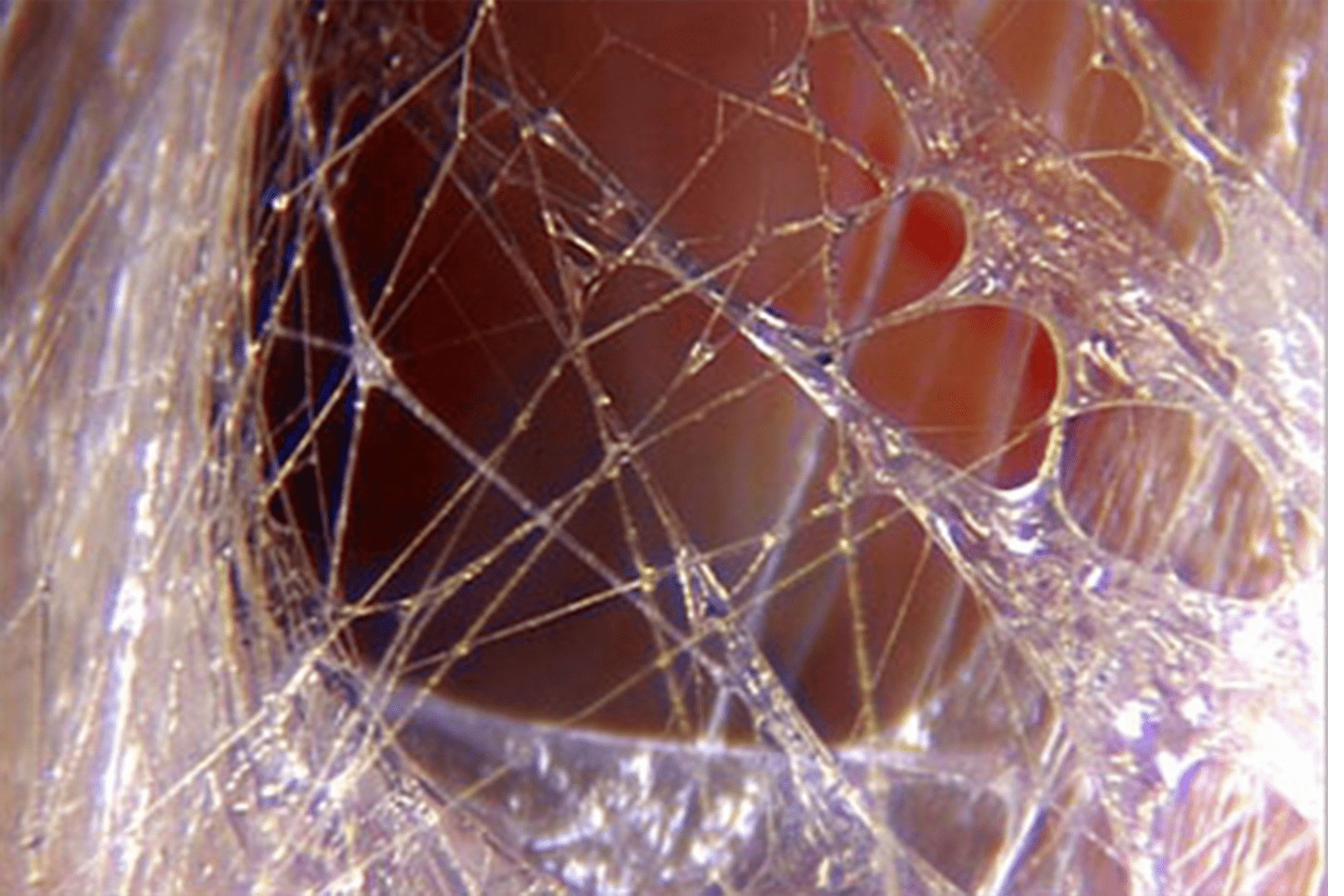
Most people have never seen what restricted Fascia actually looks like inside the body. This dissection clip from Anatomy Trains shows the tissue directly. When it is healthy it is almost transparent and completely fluid. When it restricts, it becomes the dense, webbed tissue that is compressing the structures around it and generating the pain you have been living with.
Anatomy Trains dissection series, showing Fascial tissue at the site of restriction
This is what myofascial release addresses. The tissue is visible, measurable, and it responds directly to skilled treatment. When the restriction releases, the structures it was compressing decompress. The pain signals quiet. Movement returns. Most patients feel that change within a single session.
What Conditions Respond to Myofascial Release?
At Physology, myofascial release forms the treatment core for the chronic pain conditions we work with most consistently. Because Fascia is involved in every movement and connects every structure in the body, Fascial restriction is a primary driver in a wide range of presentations that conventional treatment approaches as separate problems.
Fibromyalgia responds particularly well to myofascial release because widespread Fascial restriction across multiple Anatomy Trains lines is the mechanism behind the diffuse, whole-body pain pattern that characterises the condition. Chronic back pain, whether lower back, mid-back, or sacroiliac, almost always involves Fascial drivers in the posterior chain, the diaphragm, or the deep hip flexors that standard back pain treatment never reaches. Neck pain, shoulder pain, sciatica, and headaches each have well-documented Fascial pathways that explain why they persist despite local treatment.
We also work extensively with patients from Bath, Bristol, and the surrounding areas who have tried multiple approaches and been told their pain is unexplainable or that they will need to learn to manage it. In the majority of these cases, the explanation is Fascial restriction that has never been properly assessed. The Physology myofascial release assessment is designed specifically to find what has been missed.
Myofascial Release in Bath and Bristol
Physology operates from WellBath Yoga and Wellbeing Centre, Woolley Lane, Bath BA1 8BA, with easy access from central Bath and direct transport links from Bristol. We see patients from across the Bath and North East Somerset area, Bristol, Frome, Chippenham, Trowbridge, and further afield who are specifically looking for Fascia-based treatment that is not available through NHS pathways or standard private physiotherapy.
If you have searched for myofascial release near me, myofascial release Bath, or deep tissue massage Bath and found yourself reading about techniques that sound similar but cannot explain the difference between them, what you are most likely looking for is a practitioner who assesses the whole Fascial system rather than treating locally. That is what we do, and it is the reason our results differ from what most people have experienced before.
Our clinic in Bath is accessible and private. Sessions are two hours for the initial consultation and typically sixty to ninety minutes for follow-up treatment. We do not operate a high-volume appointment system. Every patient receives the full assessment and explanation their situation requires.
What Patients Say
★★★★★
"I had spent 28 years seeing every specialist I could find, costing tens of thousands of pounds and still experiencing daily pain. I walked out of my first session pain free and astounded."
Charlotte Mather — 28 years of back pain
Pain free after 28 years
★★★★★
"James looked at and worked on my body holistically. Something no-one else had done before. After each session I felt like a weight had been lifted from my body."
Kate Burkinshaw — Wrist and shoulder pain, professional cellist
Pain free. Playing cello again professionally
★★★★★
"Once I met James and Physology, it was literally the first session. There was such a release I felt like he'd created an actual hole in that area. As I moved, I could feel zero pulling."
Alger — Lower back pain since teens
Pain free. Has been ever since
If what you have read describes your experience, a conversation costs nothing.
Your first session at Physology in Bath is two hours. That is deliberate, and it is unlike most clinical appointments you will have experienced. The majority of that time is conversation, assessment, and education before any hands-on treatment begins. Patients travel from across Bath, Bristol, and the wider region for this consultation specifically because it provides the explanation and the plan that years of shorter appointments have not.
1
Your Full History
We start by listening. Your full story, in your own words, without anyone glancing at the clock. We want to understand your pain from the beginning: when it started, how it has changed, what has helped, what has not, and what the medical system has told you along the way. The history is where the pattern begins to form.
2
Fascial and Postural Assessment
Using the Anatomy Trains framework, we assess your whole body posture and movement pattern to identify where the primary Fascial restrictions are sitting, how they are connected, and how they relate to where you are experiencing pain. We explain everything we find, in plain language, as we go.
3
A Map of Your Pain
By the time we finish the assessment conversation, you will understand your pain more clearly than you ever have. You will see exactly how the restriction pattern developed, why it has spread to where it has, and why the approaches you have tried have produced the results they have. Most people describe this moment as a measurable relief.
4
First Myofascial Release Treatment
We begin hands-on treatment in the first session, addressing the primary restriction identified in the assessment. We see a 30 to 50 percent reduction in pain in the area we work on in that first session. Most patients are pain-free within four to eight sessions, with measurable improvement after each one.
5
Your Clear Treatment Plan
You leave with a complete understanding of your pain, a clear plan for treatment, and a realistic picture of what the path to pain-free looks like for your specific situation. No guesswork. No trial and error. A structured plan built on twenty years of clinical experience.
Common Questions
The techniques involve sustained pressure into restricted Fascial tissue, held until the tissue begins to release. Most patients describe the sensation as a deep pressure that transitions into a sense of space or release in the area. It is not a sharp or aggressive technique. The pressure is applied slowly and the response from the tissue guides the treatment throughout.
Deep tissue massage uses movement and friction to address muscle tension. Myofascial release uses sustained pressure held at the point of restriction until the Fascial tissue releases. The mechanism is different, the target tissue is different, and the duration of results is different. Myofascial release is specifically designed to change the Fascial environment rather than the muscle layer it surrounds.
Get in touch, tell us your symptoms and history, and we will tell you whether we can help and what treatment is likely to involve. Every presentation is different and we prefer to give you a clear, specific answer rather than a generic price list.
Because the approach is results-based, you will not need to guess. The change in session one is clear and measurable, and each subsequent session produces further improvement you can feel. Most patients are between 4 and 8 sessions in total. You will always know the treatment is working because you will feel the difference each time.
The first session is two hours. We begin with your full history, listening to everything about your pain, your previous treatment, and how it affects your life. We then carry out a complete whole-body Fascial assessment using the Anatomy Trains framework, explaining everything we find as we go. Treatment begins in the first session, and most patients leave with a measurable reduction in pain and a clear understanding of what has been driving their symptoms.
Physiotherapy assesses and treats the muscles and joints at the site of pain. It is skilled work and truly helps many presentations. What it does not assess is the Fascial system connecting those muscles and joints to the rest of the body. When chronic pain is driven by a Fascial restriction pattern that originated elsewhere in the system, local physiotherapy cannot reach the source. That is the gap Physology is designed to close.
Message us on WhatsApp with a brief description of your symptoms and how long you have been dealing with them. James responds to every message personally, usually the same day. He will tell you whether your presentation fits the pattern we treat and exactly what the first session will involve before you commit to anything. There is no obligation and no pressure. Send a message here.
Perspective
The Real Cost Is Everything You Have Already Spent
£10k+Typical specialist spend over 10 or more years of chronic pain
£2k+/yrOngoing medication and pain management costs
YearsLived in pain, doubt, and reduced quality of life
4 to 8Sessions to pain free with the Physology Method
Charlotte spent tens of thousands over 28 years before one session changed everything. The consultation is your chance to find out whether Fascia is the missing piece, with measurable proof on the day.
✓
The Physology Guarantee
If you do not feel a measurable reduction in pain in your first session, the consultation is free. No awkward conversations, no conditions. We are confident enough in what we do to put that in writing.
Physology Bath & Bristol
Ready to Work on the Real Cause?
A Physology myofascial release consultation in Bath gives you a full Fascial assessment, a clear explanation of what is driving your pain, and measurable improvement from the very first session. Serving Bath, Bristol, and the surrounding area.
"I had spent 28 years seeing every specialist I could find, costing tens of thousands of pounds and still experiencing daily pain. I walked out of my first session pain free and astounded."
Charlotte Mather — 28 years of back pain
Pain free after 28 years
P.S. If you have not experienced myofascial release before and are not sure what to expect, get in touch and ask. We will explain exactly how the technique works, what you are likely to feel, and what the realistic outcome is for your specific presentation before you commit to anything.
P.P.S.What Is Fascia? explains the tissue myofascial release works with. The Physology Method covers how the Fascial assessment guides where and how the technique is applied.
Sports Massage Bath Myofascial release is often combined with the work described on our page. Deep Tissue Massage Bath For a comparison of how myofascial release differs from deep tissue approaches, see our page. The Physology Method The assessment system that guides where and how the technique is applied is covered on page.