Where Your Pain Actually Comes From
Understanding this chapter will change how you experience every symptom you have.
If you take one thing away from everything in this book, let it be this.
Your Fascia contains approximately 250 million nerve endings. That is six times more than the muscles it surrounds. Six times more pain-sensing capacity. Six times more ability to generate the signals your nervous system interprets as chronic, persistent, apparently inexplicable pain.
Fascia makes up the largest continuous tissue system in your body. It is everywhere. It surrounds every muscle, every nerve, every organ, every bone. It runs without interruption from the soles of your feet to the base of your skull. And the research now confirms it is, by some considerable margin, the most pain-sensitive structure in the human body.
Not the physiotherapist. Not the rheumatologist. Not the pain specialist. The scans do not show it. The standard assessments do not assess it. The conventional treatment frameworks were not built around it. And so years of appointments, years of treatments, years of being told the results were normal, were all happening in the wrong place.
This is not a theory. The nerve ending density in fascial tissue has now been confirmed across multiple independent research programmes. The evidence is established, peer reviewed, and unambiguous.
Researchers confirmed the fascial network contains approximately 250 million nerve endings, making Fascia the most densely innervated tissue in the human body, with far greater nociceptor density than the surrounding musculature. Read the research
Fascia contains three types of nerve endings that are directly relevant to your pain experience. Mechanoreceptors, which respond to pressure and movement. Nociceptors, which generate pain signals when tissue is stressed. And proprioceptors, which give your nervous system information about position and movement.
When Fascia is restricted, all three types are affected simultaneously. The result is a tissue that is generating pain signals, disrupting movement feedback, and compressing the structures around it, all at the same time, in a location that standard medicine was not trained to examine.
Myofascial trigger points are hypersensitive spots within restricted fascial tissue that refer pain to distant locations when compressed. This referred pain pattern is one of the most common explanations for chronic pain that has no obvious local cause.
The trigger point is not where you feel the pain. It is where the signal originates. Your knee pain may be coming from a trigger point in your hip. Your headaches may be coming from trigger points in your neck or shoulders. Your lower back pain may originate from restrictions in your pelvic floor or deep hip rotators.
This explains something that almost every chronic pain patient has experienced but struggled to articulate: the pain moves. It shifts. It appears in places that seem unrelated to each other. This is not mystery. It is referred pain from trigger points in a restricted fascial system.

Histological research confirmed the existence of pain-sensing nociceptors within the thoracolumbar Fascia, with their density increasing significantly under chronic painful conditions, directly explaining persistent back pain. Read the research
A systematic review of 23 studies confirmed Fascial tissue is innervated throughout the body by both proprioceptors and nociceptors, with nociceptor density increasing in pathological tissue. Read the research
The worst part of fibromyalgia is not the pain. It is the word permanent that gets attached to it before anyone has actually tried to understand what is causing it.
The ground substance within Fascia is not static. Under healthy conditions it is a fluid gel that allows the fascial layers to glide over each other freely. When Fascia is under sustained stress, the ground substance changes its viscosity. It becomes denser, more viscous, less mobile.
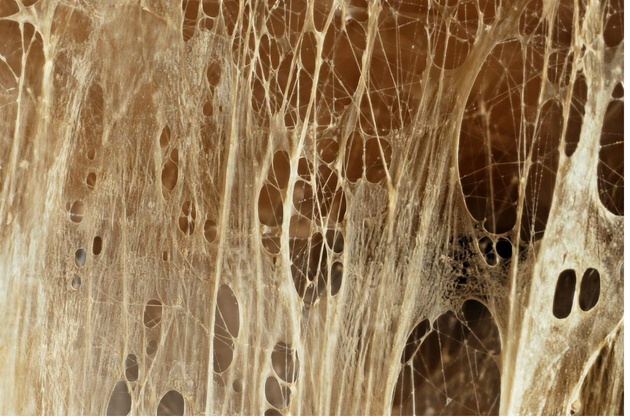
This densification process is cumulative. One area of restriction creates altered movement patterns, which create compensatory strain elsewhere, which creates further restriction, which creates further densification.
Gil Hedley is an anatomist who spent years dissecting the fascial system in human cadavers. What he found changed how a generation of practitioners understand tissue. This is the video that shows densification as a physical, visible reality.

Research has now confirmed that this densification process is directly associated with pain generation and is entirely reversible when addressed properly. The tissue that appears fine on a scan is not fine. It is simply operating in a way the scan cannot detect.
A peer-reviewed review confirmed that Fascial densification directly modifies the mechanical properties of deep Fascia, stimulates embedded pain receptors, and is an easily reversible alteration when appropriate treatment is applied. Fibrosis, by contrast, requires different intervention. Read the research
A multi-database review of studies from 2000 to 2025 confirmed that Fascial densification, hyaluronan aggregation, and altered viscoelasticity are now recognised as primary drivers of chronic pain, with ultrasound elastography and MRI directly confirming reduced Fascial sliding in patients with chronic back and neck pain. Read the research
There is a third dimension to chronic pain that conventional medicine almost entirely overlooks, and it is one of the most important things you will read in this book.
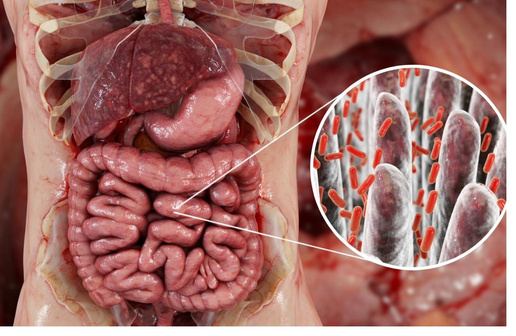
Your gut microbiome, the community of bacteria living in your digestive system, produces the chemical environment in which everything else operates. When it is healthy and diverse, it produces anti-inflammatory compounds, neurotransmitter precursors, and molecules that support the integrity of the gut lining.
When it is disrupted, the chemistry changes. Pro-inflammatory compounds increase. The gut lining becomes more permeable. Compounds that should remain in the digestive tract enter the bloodstream and trigger a systemic inflammatory response that directly lowers your pain threshold and sensitises your nervous system.
This is why two people can have the same Fascial restriction and experience entirely different levels of pain. The biochemical environment determines how loudly the signals are broadcast.
What you are looking at, across these three chapters, is not three separate problems. It is one problem expressed across three dimensions simultaneously.
The Fascial restriction generates constant signals. The nervous system, sensitised by years of incoming load, amplifies those signals. The gut chemistry, disrupted by the stress of chronic pain and by diet, maintains the inflammatory environment that keeps sensitisation high. Each dimension reinforces the others.
This is why isolated treatments produce isolated results. Physiotherapy addresses the movement pattern but not the tissue restriction. Pain medication alters signal perception but not the signal source. Dietary advice addresses gut chemistry but not the mechanical problem. None of them are wrong. None of them are enough on their own.
The reason your pain has not resolved is not that you are untreatable. It is that every treatment you have tried has addressed one dimension of a problem that exists in three.
Understanding this is the most important thing that happens in this book. Because once you understand it, the next question is obvious. What does it look like to address all three at once?
If you have a fibromyalgia diagnosis, this section is for you. And what you are about to read is likely to be the first explanation of your condition that actually makes sense of your experience.
Think about what happiness is. The actual state, not just the word. There is no single organ in your body that produces happiness. There is no scan that shows it. No blood test that detects it. And yet when you are in it, it is completely, physically real. Your heart rate changes. Your breathing changes. The tension in your body changes. The way you perceive everything around you changes.
Happiness is a state your body enters when a specific combination of things align. Brain chemistry, nervous system tone, physical sensations, thoughts, environment. When those components combine in a particular way, the state emerges. When the conditions shift, the state ends.
Excitement works the same way. Fear works the same way. Deep calm works the same way. These are not things you can point to on a scan. They are states. And they are entirely real.
Fibromyalgia is the same kind of thing.
It is not a defect you can locate. It is not a lesion or a torn structure or a disease process with a visible marker. This is why the scans come back normal. This is why the blood tests find nothing. They are looking for a thing, and fibromyalgia is not a thing. It is a state your body has entered, generated by the combination of specific inputs across three interconnected systems.
Traditional healthcare has spent decades trying to find fibromyalgia as if it were a concrete disease entity, something to isolate, label, and target with a pill. It never found it, because it was never there to find in that form. What was there, what has always been there, is a set of systems pushed past a threshold at the same time.
Those three systems are exactly what this chapter has described. Widespread fascial restriction generating a constant load of pain signals. A nervous system sensitised by years of incoming threat, amplifying everything. And a gut chemistry, disrupted by chronic stress and diet, maintaining the inflammatory environment that stops the body from resetting.
When any one of these systems is under strain, your body can usually compensate. But when all three are turned up high simultaneously, something changes. You cross a threshold. The combined load becomes more than the body can absorb, and it enters a state that expresses itself as widespread, diffuse, apparently inexplicable pain across multiple regions of the body.
That is fibromyalgia. Not a mystery. Not imaginary. Not permanent. A state, generated by identifiable inputs, in a body that was responding exactly as it was designed to respond.
The research now confirms the microbiome profile of fibromyalgia patients is measurably distinct. The fascial restriction patterns are consistent and reproducible. The nervous system sensitisation is documented and understood. Every piece of this is real, physical, and verifiable.
States can be entered. Which means states can be exited. The same logic that explains how you arrived in this state also explains how to leave it. Change the inputs, and the state changes. Address the fascial restriction, calm the nervous system, restore the gut chemistry, and the conditions that created fibromyalgia no longer exist. The body has no reason to maintain the state. So it does not.
This is not a theory. It is the result of over twenty years of clinical work with people in exactly the situation you are in now. The chapters ahead show you what addressing all three looks like in practice.
Research confirmed fibromyalgia patients have a measurably distinct gut microbiome profile, with machine learning distinguishing fibromyalgia from healthy controls based on gut bacteria alone, establishing a direct biological link between gut chemistry and fibromyalgia. Read the research
Faecal microbiota transplantation from fibromyalgia patients into germ-free mice induced widespread pain, fatigue, and molecular changes mirroring human fibromyalgia. Transferring healthy bacteria reversed it. The gut microbiome is not merely correlated with fibromyalgia pain, it causally promotes it. Read the research
Multiple active myofascial trigger points reproduced the entire spontaneous pain pattern in women with fibromyalgia, directly linking fascial restriction to the widespread pain distribution that characterises the condition. Read the research
What you have just read is not a theory about pain. It is a description of what is already happening in your body. The chapters ahead show you how to change it.
You are not sensitive. You are not dramatic. You are not making it worse by thinking about it. Your body is responding to something real. And the fact that nobody has found it yet does not mean it is not there.