The Gut Connection
This is the chapter that most surprises people.
Most people arrive at this chapter carrying two separate problems. The pain they came here for, and the digestive symptoms they assumed were unrelated. This chapter is where those two things become one conversation.
Your gut contains approximately 100 million neurons, more than your spinal cord. It communicates continuously with your brain via the vagus nerve and via the blood chemistry produced by the microorganisms living within it. This communication runs in both directions, but the majority of the signals run upward, from gut to brain, rather than downward.
The microbiome, the community of bacteria, fungi, and other microorganisms living in your gut, produces compounds that directly influence your nervous system. When the microbiome is healthy and diverse, these compounds include anti-inflammatory molecules, neurotransmitter precursors, and compounds that support the integrity of the gut lining.
When the balance of beneficial and harmful bacteria in the microbiome is disrupted, a condition researchers call dysbiosis, the chemistry changes. Inflammatory compounds increase. The gut lining becomes more permeable. Compounds that should remain in the gut enter the bloodstream and trigger a systemic inflammatory response.
How Gut Chemistry Amplifies Your Pain
Dysbiosis
Microbiome balance disrupted
Leaky Gut
Gut lining becomes permeable
Inflammation
Cytokines enter bloodstream
Sensitisation
Pain threshold drops
Amplified Pain
More pain from less cause
Restoring microbiome balance reverses this chain. Inflammation reduces. The nervous system quietens. Pain diminishes.
McGill University researchers transplanted gut bacteria from fibromyalgia patients into germ-free mice. The mice developed persistent pain. Replacing with healthy microbiota reversed it, proving the gut microbiome has a direct causal role in fibromyalgia pain. Read the research
The first study to demonstrate gut microbiome alteration in a non-visceral chronic pain condition, finding significant bacterial composition differences in fibromyalgia patients correlated directly with symptom severity. Read the research
You are exhausted and you cannot explain why. You are in pain and you cannot point to where. Your sleep is broken and nobody can tell you the reason. You are not falling apart. These are all connected. And nobody has ever told you that.
The systemic inflammation produced by dysbiosis does several things that directly worsen chronic pain.
It sensitises the nervous system. When dysbiosis is present, the gut releases inflammatory signalling proteins called cytokines into the bloodstream. These act directly on pain neurons, lowering the threshold at which they fire. Less stimulus is needed to trigger a pain signal. The whole system becomes more reactive. Shifting the microbiome reverses this, and the nervous system becomes progressively quieter as the chemistry changes.
It affects tissue repair. The inflammatory environment created by dysbiosis influences how tissue responds to treatment. Fascia that is bathed in pro-inflammatory chemistry heals more slowly and responds less readily to manual work. As gut chemistry improves, the tissue becomes more responsive and treatment produces faster, more lasting results.
It disrupts sleep. Gut chemistry has a direct effect on how deeply and restoratively you sleep. Specifically, it influences the stages of sleep your brain cycles through, including the deep, slow-wave stages where tissue repair and nervous system recovery actually happen. As dysbiosis resolves and the microbiome rebalances, sleep quality typically improves, and better sleep directly supports every other part of the recovery process.
Your gut and your pain are in direct conversation. Shifting the microbiome through diet and targeted supplementation measurably reduces systemic inflammation within four to six weeks. This is why the nutritional component of this framework produces such rapid and significant results.
A systematic review and meta-analysis confirmed that patients with chronic pain show consistent gut microbiome alterations compared to healthy controls, supporting dysbiosis as a meaningful contributor to chronic pain states. Read the research
The vagus nerve is the longest cranial nerve in your body, and it serves as the primary physical communication channel between your gut and your brain. It is a two-way highway, and approximately 80% of the signals that travel it are going from the gut to the brain, not the other way around.
When vagal tone is high, the body's anti-inflammatory mechanisms are well-supported, pain signals are modulated, and the nervous system maintains access to the calm, restorative states that you rarely experience.
When vagal tone is low, the anti-inflammatory mechanisms are impaired, pain signals are amplified, and the nervous system stays locked in threat mode.
Here is the remarkable part: skilled manual Fascial therapy directly stimulates vagal activity. The mechanoreceptors in your Fascial tissue, when activated by sustained, skilled manual pressure, send signals that activate the parasympathetic nervous system and increase vagal tone. This is one of the reasons that a good Fascial session produces physical relief and a profound sense of calm and nervous system downregulation, and why the benefits extend well beyond the mechanical release itself.
When you are under chronic stress, your body produces elevated levels of a stress hormone called noradrenaline. Among its many effects, noradrenaline has a direct tightening effect on fascial tissue. It causes the cells within Fascia to contract, physically stiffening the tissue.
This is the biochemical bridge between the psychological and the physical in chronic pain, not a vague metaphorical connection, but a specific hormonal mechanism. The stress of being in pain, of searching for answers, has been contributing to the tissue stiffness you have been experiencing. Which means that as the tissue releases and pain reduces, the stress chemistry shifts too. The system begins to run in the other direction.
And it works in the other direction too. As the Fascial restrictions are released, as pain reduces, as the nervous system begins to calm, stress levels fall. The noradrenaline decreases. The Fascial stiffness reduces. More mobility and less pain further reduces stress. The cycle runs backwards.
This is why, at Physology, education is not something that happens alongside treatment. It is part of the treatment itself. As you begin to actually understand your own journey, something shifts that no manual technique alone can produce. The years of not knowing, of being told nothing was wrong, of carrying a private uncertainty about whether you would ever find the answer, that weight has been keeping your stress chemistry elevated. It has been feeding the noradrenaline. It has been tightening the tissue.
When that weight starts to lift, because you finally understand what happened, because the pattern makes sense for the first time, because you can see clearly that this was always a mechanical problem in a tissue nobody looked at, the system begins to calm on its own. There is a particular kind of relief that comes from understanding why the pain was there, as much as from the pain reducing. And that relief is physiologically real. It is not a feeling. It is your stress chemistry shifting. Your Fascia responding. Your nervous system stepping back from the alert state it has been holding for years.
That is why the depth of explanation in this book matters. Understanding your journey is not just intellectually satisfying. It is part of how you get out of pain.
Given everything above, the dietary approach we will discuss in Part Three is not a wellness add-on. It is a direct intervention on the third dimension of your pain.
Specific foods feed the beneficial bacteria that produce anti-inflammatory compounds. Specific foods starve the harmful bacteria that produce pro-inflammatory ones. The inflammatory state of your gut, and by extension the inflammatory state of your entire nervous system, can be measurably changed within four to six weeks of committed dietary change.
This is why people who combine Fascial therapy with the nutritional approach see faster and more complete results than those doing the manual work alone. The two interventions are addressing different dimensions of the same underlying problem, and they support each other in a way that makes the whole significantly greater than the sum of the parts.
Before we move into the method, it is worth pausing to see the whole picture at once. Everything across the last few chapters comes together here into something simple and clear.
Your pain exists because three systems in your body have been pushed past a threshold at the same time. Think of each one as a dial. When any one dial is turned high, your body can usually compensate. When all three are turned up simultaneously, you cross an invisible line. You enter the state your pain has been living in.
This is not a theory. The research behind all three dials is established, peer-reviewed, and unambiguous. And the pattern shows up in every fibromyalgia patient and the vast majority of chronic pain cases seen over twenty years of clinical practice.
Fascia is the mechanical foundation and, in almost every case, the primary driver that needs addressing first. It is the source of the signal load pushing everything else up.
When Fascia is restricted, it densifies. It grips the nerves running through it. It generates constant pain signals. And because the fascial network connects the entire body in one unbroken structure, one restriction creates tension throughout the whole system. The tender points used to diagnose fibromyalgia are, in the research, active myofascial trigger points in restricted fascial tissue. When those points are stimulated, they reproduce the entire spontaneous pain pattern. The peripheral driver of your widespread pain has been the Fascia the whole time.
When we address dial one, something important follows naturally. The danger signals flooding your nervous system reduce. The system begins to calm on its own. The other dials start to follow without needing direct intervention.
Your nervous system has not malfunctioned. It has adapted, completely sensibly, to years of incoming threat signals from restricted tissue. Pain pathways have sensitised. Thresholds have dropped. The sympathetic branch has become dominant, keeping stress hormones elevated, which tightens the Fascia further and keeps the loop running.
You cannot turn this dial down directly. You cannot decide to desensitise your nervous system any more than you can decide to lower your heart rate through willpower. What you can do is remove what is driving it. As the fascial restrictions release, the nervous system receives permission to calm. It does not need to be instructed. It simply responds to changed conditions.
For most people, dial two follows dial one. The tissue work does it. You do not have to address it separately.
Your gut produces the chemistry in which your entire nervous system operates. When the bacterial balance in your gut is disrupted, inflammatory compounds increase, the nervous system becomes harder to calm, and fascial tissue stiffens further in response. Dial three amplifies everything the other two are already doing.
Researchers transferred gut bacteria from fibromyalgia patients into healthy mice. The mice developed widespread pain. Transferring healthy bacteria back reversed it. The gut is not a secondary factor. It is causally involved.
Dial three is one of the most directly correctable of the three. Specific dietary changes shift the microbiome within weeks. As the inflammatory environment changes, tissue becomes more responsive to treatment and the nervous system calms more readily.
Faecal microbiota transplantation from fibromyalgia patients into germ-free mice induced widespread pain and fatigue mirroring human fibromyalgia. Transferring healthy bacteria reversed it, proving the gut microbiome causally promotes pain, not merely correlates with it. Read the research
The first study to confirm a measurably distinct gut microbiome composition in fibromyalgia patients, with bacterial differences correlating directly with symptom severity. Read the research
A small number of people find that the right fascial work alone produces complete resolution. The other two dials were being held up entirely by the tissue restriction, and when that releases, everything else follows without further intervention.
For most people, particularly those with fibromyalgia or long-standing widespread pain, addressing dial three alongside the fascial work produces faster and more complete results. The two work on different dimensions of the same problem and they accelerate each other.
Either way, the starting point is the same. Find the restrictions. Release the system. Create the conditions for recovery.
You now understand the three systems driving your pain. The question is how to address all three in a way that is structured, sequenced correctly, and produces lasting results.
Let me show you exactly how that process works by walking you through what happens when someone comes to Physology as a patient. Because at Physology, we do all of it. You do not have to piece anything together, work out what to do next, or manage the sequence yourself. You come in, we assess the whole picture, and we guide you through every phase from first session to pain free.
Understanding how that process works in clinic is the clearest way to show you the framework. Because once you understand it, the rest of this book shows you how to build the same process around yourself, with your own local practitioners, fully guided at every stage.
We call this process the R3 System. Three phases, taken in sequence. Release, Realign, Retrain. Each one builds on the last, and the order matters as much as the content. What follows is what each phase means and what it does.
Each phase builds on the last. The order matters as much as the content.
Every Physology journey begins with a full-body Anatomy Trains assessment. We are mapping the complete restriction pattern running through your fascial network, including where you hurt and every connected area that is contributing to it, identifying the primary restriction driving the tension, the compensation chains that have developed around it, and the lines along which the work needs to happen.
In most cases the site of your pain is not where the restriction originates. That is what every previous practitioner missed. The assessment finds both where it hurts and where it is actually coming from.
Once mapped, we begin precise myofascial release along the relevant lines, which is a different discipline from massage or manipulation. It involves sustained, skilled manual pressure held long enough for the tissue to respond and release. Session by session, the restriction pattern unwinds. The fascial layers begin to separate and slide again. The signal load driving your nervous system reduces.
The nutritional work begins at the same time. From day one, the dietary protocol starts shifting your gut chemistry in parallel with the manual work. The two interventions work on different dimensions of the same problem and they accelerate each other. Tissue that is bathed in anti-inflammatory chemistry responds more readily. The nervous system calms faster. The results come quicker and they hold better.
Most people reach somewhere between 80 and 100 percent pain-free during the Release phase. It typically takes two to four weeks of sessions. For fibromyalgia or long-standing widespread pain, it can take a little longer, but the direction of travel is consistent and measurable from the first session.
Your skeleton does not sit in its position through willpower. It hangs in the fascial web. When fascial restrictions pull it out of balance, the skeleton shifts, muscles overwork to compensate, and the whole system locks into a pattern of strain.
As the Release work proceeds and restrictions let go, something happens that patients often notice before they fully understand it. They feel lighter. Taller. More settled. Their posture changes without them trying to change it. That is the skeleton finding its way back to where it belongs, because the tissue that was pulling it off-centre is no longer doing so.
Realign is built into the Release process at Physology. As the restrictions release, we track how the whole structure is responding and guide the work to ensure the skeleton is being restored to genuine balance, not just local relief. This is what creates lasting results. A body in correct structural alignment is a body that is no longer generating the compensatory tension that produces chronic pain.
This is the phase that most practitioners never reach, and it is one of the reasons that results from fascial work sometimes do not fully hold.
Once the restrictions have released and the skeleton has found its natural alignment, the body needs to learn to maintain that position under the demands of normal life. The deep stabilising muscles, which have been inhibited or overridden by years of compensation, need to be re-educated. The breathing pattern, almost always dysfunctional in people with chronic pain, needs to be corrected. Proper diaphragmatic breathing is the foundation of core stability and nervous system regulation, and it is the first thing we address in Retrain.
At Physology, we handle Retrain as part of the overall process. But Retrain is also the phase where a second specialist is sometimes needed, and it is important to be clear about this.
Some fascial practitioners understand and deliver all three phases. If yours does, you are working with someone exceptional, and you do not need anyone else.
If your fascial practitioner is highly skilled at Release and Realign but does not have the specific training to deliver Retrain, you will need a movement specialist who does. This is not a failure. It is simply a different area of expertise. The book shows you exactly how to find that person, what to look for, and the questions that reveal whether they understand this work well enough to deliver it correctly.
Retrain is also the phase where timing matters enormously. The rule is simple: movement work begins when only around twenty percent of your original pain remains. At that point the fascial restrictions have been sufficiently addressed, the structure is ready to be loaded, and Retrain will reinforce the progress rather than work against it. Begin too early and you risk reinforcing the very compensation patterns you are trying to correct.
For the reader working with their own practitioners, the rest of this book does exactly that. It holds the framework, manages the sequence, and guides you through every decision.
Parts Three and Four of this book are built around this exact framework.
You will learn how to find a fascial practitioner who can deliver Release and Realign with genuine skill, and the specific questions that reveal whether someone truly understands this work or is simply familiar with the terminology.
You will learn how to find a movement specialist who understands Retrain, what that work should look like, and how to know when you are ready for it.
You will have the complete nutritional protocol to run alongside the fascial work from day one, because the timing of that dial matters as much as the content of it.
And you will have the week-by-week timeline that shows you where you should be at each stage, what is normal, what is progress, and what to do when something does not feel right.
Rather than guessing or piecing things together from different sources and hoping they fit, you will be following a structured, sequenced process, guided by the same framework that Physology uses in clinic, adapted for wherever you are in the world.
I want you to pause for a moment before turning this page.
Think about what you came in with. The years of appointments. The explanations that never quite held together. The particular exhaustion that comes from the repeated experience of being told that nothing was there, when you knew with absolute certainty that something was.
You were right. You have always been right. Your body was telling the truth the entire time. And what you have just read is the explanation you were looking for. The anatomy. The mechanism. The reason. Not a theory or a trend. The actual tissue.
Most people who have lived with chronic pain for years never find this. They manage. They adapt. They quietly make the pain the background of their life, because nobody ever showed them what was actually generating it. You now know what they do not. You understand your own body at a level that most of the practitioners you have seen never reached.
That is not a small thing. That shift in understanding, from confusion to clarity, from self-doubt to certainty, is physiologically real. Your nervous system is already responding to it. The stress of not knowing has been part of what was keeping your pain in place. Some of that stress has just left.
The answer was always there. In a tissue nobody showed you. In a system nobody looked at. You kept searching when every appointment said there was nothing to find. That instinct was accurate.
Real Patients. Real Outcomes.
Two people who were sitting exactly where you are now. Read what they had been through. Then watch what happened.
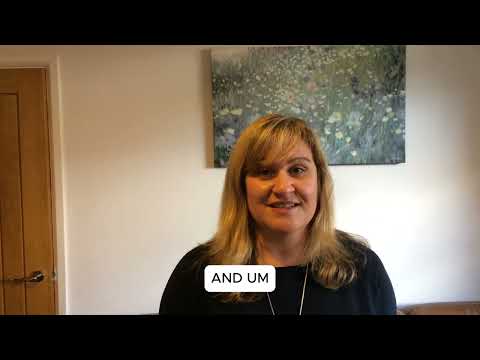

What it feels like
Six weeks from now, the alarm goes off. You open your eyes. And in that half-awake moment before the day starts, you notice something is different. The inventory you have run every morning for however long this has been going on, is quieter. The pain is further away. Smaller.
You get up. You move to the kitchen. And somewhere in that ordinary morning, you realise you have not been thinking about it. That for a stretch of time, it stopped organising your day.
That is the clinical reality of what this framework produces. The tissue releases. The nervous system calms. The gut chemistry shifts. And around week four, the thing that has run every morning for years quietly steps back.
It is vital now that we take the knowledge I have given you and turn it into action to get yourself pain free. I have already organised this knowledge into a practical road map for you. A journey to pain free that you will be helped to travel in the pages that follow.
We will be finding the perfect local practitioner for you, wherever you live in the world. And giving you the tools to work with them through the Physology Method. I have already created for you the supplement and nutrition plan that will accelerate your results. They are in the pages that follow and you will be able to start them this week.
You have already begun this journey. Let's finish the story together.